
A Different Kind of Activism:
Who Will Guard the Guards Themselves?
How about Us?
When it comes to anti-ageism, Dr. Becca Levy is a star. She and her team at the Yale School of Public Health have studied older adults for years, and one of her key findings is that having a positive attitude about aging increases life expectancy by an average of 7.5 years. The concept that ageism is literally toxic is now a bedrock of anti-ageist thinking.
If You Don’t Measure It, It Doesn’t Exist
In March of 2026 Levy and her team published a new study showing that a significant proportion of older persons improves in cognition, movement or both over time. That’s not news to those of us enjoying a creative Renaissance after sixty, but it is news to medical science. But why didn’t they know? Because science is gated by the questions scientists ask, and until the Levy study, scientists did not look at the upside of aging. As Levy says in the introduction to her 2026 publication:
“A widespread assumption exists among scientists, health care providers, and the public that later life is a time of inevitable and universal cognitive and physical decline. This assumption is likely due to considering older persons who improve to be exceptions, and the reliance on aging-health measures that do not allow for improvement.”
Confirmation bias becomes entrenched when you only collect data that reinforces your beliefs.
The Brain Health Registry, Revisited
I know something about “aging-health measures that do not allow for improvement.” As a participant in an ongoing clinical study called the Brain Health Registry, I answered question after question about how my physical and cognitive health were (supposedly) deteriorating, even while I accomplished new things and developed new skills. As I wrote in a prior article (and in a 2022 email to Dr. Levy):
“There were a dozen questions about hoarding (If emergency responders came to your home, is there so much clutter they would have trouble finding you?). There were many questions about memory (Do you have more difficulty remembering names than six months ago? A year ago?). There were emotional health questions (How often do you feel hopeless?). There were self-care questions (Are you able to wash your entire body by yourself?). Completely missing were questions about developing new skills, completing new accomplishments, or sharing a lifetime of wisdom in our older years. Most multiple-choice questions allowed graduated responses for how badly you were doing (from slightly worse than a year ago, down to a polite version of “I suck at this”). But there was no separate answer for doing better than a year ago, just a box that combined doing better with doing the same as a year ago. For almost every question, there was no way to stipulate positive change.”
The Role of the Institutional Review Board
There is a long history of studies that actively abused participants, including Nazi experiments on prisoners and, here in the US, the Tuskegee Study that tracked African American men with syphilis for decades without providing information or treatment in 1996. The US Public Health Service created Institutional Review Boards to monitor clinical studies, and in 1991 the US Department of Health and Human Services published the Common Rule that standardized their operations to protect subjects from exploitation.
From my earlier career in biotechnology, I knew that the purpose of an IRB is to protect clinical study participants in accordance with the law and implementing FDA guidelines. So back in 2022 I wrote to the IRB that oversees the Brain Health Registry. I asked them to consider Becca Levy’s findings: If all ten thousand participants in this study answered a lengthy questionnaire every six months that reinforced negative views of aging, wouldn’t that damage the participants? And as the protectors of subject safety, wasn’t it the duty of the IRB to compel the study authors to add questions about positive change?
But I heard back that the IRB determined there was no reason to change the study.
This month I sent the IRB the new publication from Becca Levy’s team and once again asked them to revise the Brain Health Registry to measure positive change as well as negative. So far I’ve only received a form letter in response.
This is not surprising because report after government report has found that IRB oversight of clinical trials is inadequate and becoming more so. Increased workload and pressures from sponsors to minimize costs and maximize revenues, along with the commercialization of scientific research, have compromised IRB supervision of clinical studies.
How We Can Change the System
I hope that over time Becca Levy’s challenge to the current norms of studying olders will create positive change. But as older adults affected by this ageist gap in studies about us, what can we ourselves do to help reset expectations?
First of all: If you are invited to participate in a study of older adults, ask ahead of time in writing whether the study measures improvement. Participate in the study only if the answer is yes or if they commit to changing the study. Withdraw from the study if they won’t commit, and put your reason in writing.
Do this to protect your own health, as well as to educate those who study our population. If possible, share a copy of Dr. Levy’s new study with the clinical trial organizers.
But what else can we do? For example, could participants like me sue the sponsors of a clinical study that reinforces negative stereotypes in ways that may be harmful? The answer is maybe. Sure, anybody can sue anybody about anything, but the burden of proof is high. An article in the AMA Journal of Ethics put it this way:
“An IRB may escape liability if there is no tangible injury to a human subject. In other words, the IRB is not liable for negligence if an injury did not occur. As a reminder, negligence contains four elements: duty, breach of the standard of care, injury, and causation. Based on these elements, a plaintiff can successfully claim negligence against an IRB only by demonstrating that the IRB acted negligently with respect to each element. The degree of injury usually has an impact on the negligence claim, so the graver the injury due to the clinical trial, the easier for the harmed subject to prove negligence against the IRB.”
Connecting Levy’s findings with actual damages to study participants would be difficult within the timeframe of a lawsuit.
Who Will Guard the Guards Themselves?
And what about reporting these one-sided studies to the FDA? The agency has guidelines that lay out expectations for how IRBs should protect human health, and FDA has the authority to disqualify an IRB. But of the roughly 2300 IRBs in operation in the United States, FDA has only ever taken action against five, and only disqualified one.
This is partly because the number of inspections FDA conducts on IRBs is small and getting smaller. FDA conducted 336 on site inspections of IRBs in 1999, and an average of 133 a year from 2010 to 2021.
All this points to inadequate oversight of clinical studies, and not only for older adults.
A Different Kind of Activism
Let’s consider another approach: What if age-aware olders joined IRBs?
It’s not as far-fetched as it sounds. Under the Common Rule established by the US Public Health Service, IRBs must include in their membership someone from the community who brings an outside perspective. Boards regularly reviewing research involving vulnerable populations should include members knowledgeable about those populations. An IRB must also include a person who is not a trained scientist, and one person can fulfill both those roles. Any one of us could join an IRB in our area and bring our perspective to the board.
If that’s something you might consider, here are examples of the application process from Rutgers University and the University of Wisconsin. Or if you’re in the Bay Area, here is information from the IRB at UCSF — the one that oversees the Brain Health Registry.
The Bigger Picture
For new drugs (as opposed to survey studies like the Brain Health Registry), IRB approval is just one part of the FDA approval process. Companies and universities must also comply with FDA guidelines that are written to show companies how FDA enforces the law.
Back in March of 2022 I was consulting for a university doing clinical trials on cancer immunotherapy drugs. Almost all of our patients were older adults, but many of our clinical trial participants were younger people who might better tolerate the rigors of these treatments. FDA issued a guidance called Inclusion of Older Adults in Cancer Clinical Trials, and suddenly the university had to consider how the ages of participants reflected the expected ages of patients. There was a lot of grumbling from doctors designing the studies. But the university IRB that could have raised the issue of how knowledge gained from our studies actually applied to our patients had never done so, as far as I know.
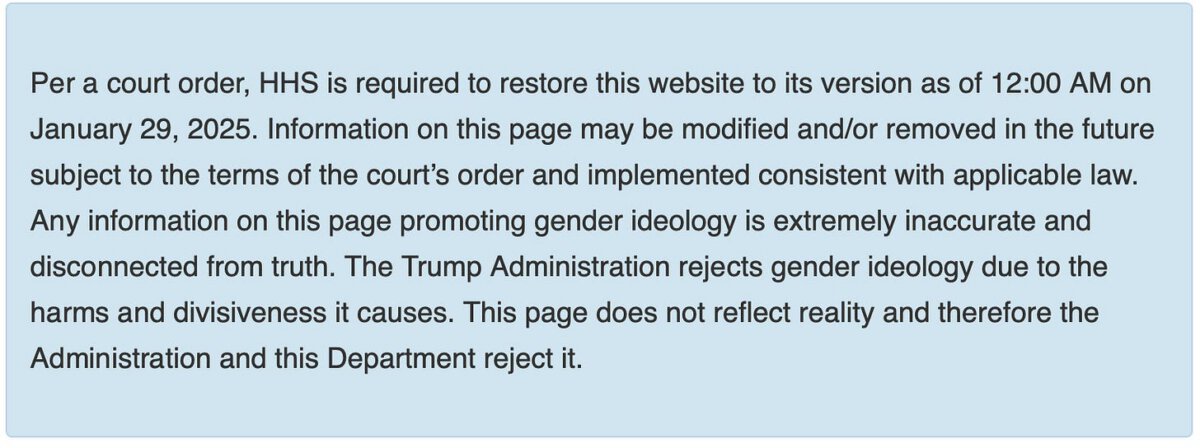
In 2024, FDA issued another new guidance. Diversity Action Plans to Improve Enrollment of Participants from Underrepresented Populations in Clinical Studies. This guidance requires sponsors of clinical trials to submit their plans to FDA to include women, persons of color, and older persons in clinical trials. The word “Diversity” in the title apparently made it an administration target; the guidance was removed in January 2025 and only restored after litigation. Even now, the guidance on the FDA website includes extraordinary language from the administration claiming the guidance “does not reflect reality.”
We have been here before. We who are older lived through a time when clinical studies were conducted almost entirely on young white able-bodied men. By choosing to join an IRB, any one of us can bring that perspective to bear and ask clinical trial sponsors this essential question: Does this protocol’s design produce knowledge that describes the patients who will receive the drug?
All that, plus when studies specifically claim to measure changes in older adults, we can ask: What about our growth? What about the books we write, the classes we teach, the weights we lift? What about the reality of life as we age?
We have Dr. Levy’s study to thank for documenting our positive change.